
“Myopia,” commonly known as nearsightedness, is a major vision problem globally. It affects your distant vision and has become a widespread concern in India. Technology use in daily life plays a key part in this rise. Many rely heavily on devices, causing a significant shift needing focus.
This piece aims to explore the ins and outs of myopia. We’ll discuss what leads to it, spot the warning signs, and cover how it can be treated. Staying away from issues is important with our tech-filled days. Understanding better helps deal better with myopia. Here, learn all about myopia to protect your eyesight now.
What is Myopia?
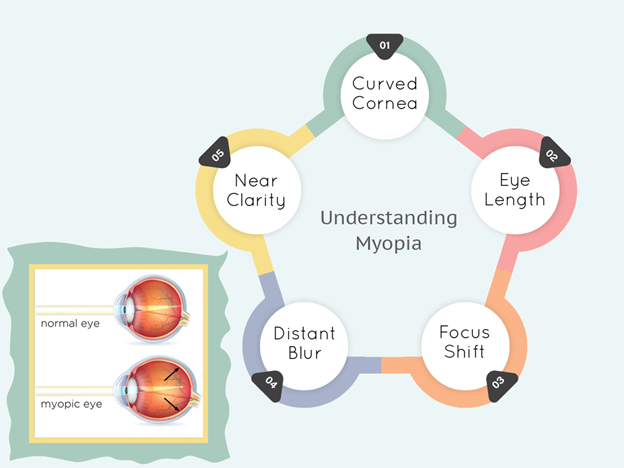
At its core, myopia is when the eyes misinterpret the incoming light. Normally, light should hit the retina directly for clear sight. A myopic eye focuses light before it reaches the retina, causing distant visions to blur. This happens because the eye is either too long or curves too much. People with myopia see close-up things clearly but struggle with what’s far ahead. That’s why it’s also called nearsightedness.
There’s a rising trend of myopia worldwide, especially in kids and young adults. Heavy academic stress and too much screen time play a role in this uptick. If trends continue, over a billion people could face severe myopia by 2050. The real worry is not just blurry vision but other risks like retina problems or glaucoma. Understanding myopia’s impact is key for better treatments and prevention.
How Myopia Affects Your Vision
In a normal eye, the cornea and lens work together to focus light. In a myopic eye, this focus is off, causing blurry distance vision. Imagine a camera that fails to focus well on distant objects. Light hits too soon in the myopic eye, not reaching the retina where it should be. Diagrams can show how these differences affect focus clearly.
Refractive errors happen when the eyes can’t bend light properly. This means distant images become unclear, while close-up vision remains clear. Eye length and corneal shape are reasons behind this common issue. It’s important to understand this impact on everyday tasks at work or school.
Recognizing Myopia Symptoms
People often have signs of myopia, like frequent squinting when looking far. Persistent headaches, especially after reading or using screens, are another hint. Vision becomes blurry when trying to see distant objects clearly. Spotting these signs early helps in managing myopia effectively.
Quick detection is key to handling and improving myopia over time. Recognizing symptoms soon can prevent more serious issues later. Regular check-ups are essential for children who might not express vision problems freely. Early discovery lets you take action with glasses or contacts. Timely steps make dealing with myopia more manageable overall.
Causes and Risk Factors for Myopia
Genetics significantly impact the possibility of becoming nearsighted as an adult. If your parents have myopia, chances are, you might get it too. This trait suggesting a genetic factor means near vision issues may run in families.
Our surroundings also play a big part in how our eyesight changes over time. These days, many people spend lots of time inside, usually looking at screens. Such habits can cause increased levels of poor vision in young ones and grown-ups. It’s common to stay glued to screens without enough breaks, leading to strained eyes further contributing to nearsightedness. Tackling this involves changing daily habits to focus more on maintaining healthy eyes through regular exercise and care.
Complications from Progressive Myopia
Unchecked myopia quickly worsens, posing serious health risks to eyes. High myopia leads to retinal detachment, impacting your sight greatly. Further hazards include the higher risk of glaucoma and cataracts. Spotting signs of high myopia early helps avoid these issues later.
Regular eye exams are crucial for managing and monitoring myopia closely. These tests identify changes early, allowing quick corrective action on time. Eye professionals can measure progression and suggest best fitting solutions. Booking regular eye visits predicts better outcomes for eye health over time.
Diagnosing and Treating Myopia
Diagnosing and treating myopia involves a careful eye examination process. Specialists use vision tests, like reading charts, to assess sharpness at different distances. It’s crucial to check overall eye health and uncover any hidden problems through these tests so that a correct diagnosis can be achieved for a tailored treatment.
Upon diagnosing myopia, many treatment options are available to suit different needs. Glasses and contact lenses are popular because they help focus light onto the retina correctly. For those wanting permanent results, laser surgery modifies the cornea’s shape effectively. Additionally, doing myopia reduction exercises may aid vision improvement by strengthening the eye muscles. Picking the most suitable method depends on individual preferences and daily habits.
Lifestyle Tips for Managing Myopia
In today’s world, sticking to the 20-20-20 rule can really help. Every 20 minutes, look at something 20 feet away for 20 seconds. These short breaks ease eye strain from too much screen time. Doing this often keeps your eyes healthier over the years.
Outdoor play is great for children’s eye health and tackles myopia development. Playing outside under natural light supports healthy eyes. It’s vital to keep kids playing without screens, creating good vision habits early on. Parents should encourage activities and balance screen use for better eye health journeys.
Impact of Modern Lifestyle on Myopia Rates
In today’s world, myopia rates are linked to tech and city life. More device time means more screen strain on people’s eyes. Working or playing on screens can blur vision over time. Blue light from these devices also adds to eye strain.
Taking breaks and doing eye exercises can help ease discomfort.
City living raises myopia risks due to less outdoor play for kids. Kids have fewer chances to enjoy sunlight and outdoor fun. This limited exposure impacts their eye health and visual development.
Engaging in outdoor activities can help prevent myopia in children.
In Indian cities, lifestyle changes have impacted how myopia rates have soared. A shift from active rural lives to tech-dependent urban lives is clear. This has put genetic factors under the spotlight, raising questions about inherited traits.
India’s city growth sees job shifts towards screen-based work, too. People lean more on screens as digital skills become key. Recognizing these trends can inform better strategies for visual health.
Taking Charge: Proactive Eye Care
Being proactive keeps your eyes healthy for years to come. Regular eye check-ups are important; they find problems before they get worse. Early action prevents serious issues like retinal detachment in bad cases.
Preventing myopia means making small changes every day. Use the 20-20-20 rule when staring at screens: look away for 20 seconds every 20 minutes at something 20 feet away. It really helps your eyes feel better.
Keep your eyes fit with simple eye exercises that promote strength over time.
For those managing myopia, there are lots of options. Corrective lenses or laser surgery might be what you need. Picking the right solution depends on your daily life and what suits you best.
Join local health events to learn about myopia and how to manage it well. These programs help people really take control of their eye health journey.
When you know more, you make better choices for your eyes’ future.
Blurry Distance Vision? Think Myopia.
Early diagnosis makes all the difference.
Visit Swarup Eye Centre for expert evaluation and personalized myopia care.
Advanced diagnostics
Child & adult eye care
Lifestyle-based treatment guidance
Book your eye check-up today — protect your sight for tomorrow!